Table of contents
In a world where rapid response to emergencies can mean the difference between safety and disaster, advancements in firefighting technology have become more vital than ever. Discover how the latest innovations are transforming fire prevention, detection, and suppression, offering greater protection for both communities and responders. Stay engaged as the following paragraphs explore the groundbreaking tools and techniques shaping the future of firefighting.
Smart fire detection systems
Fire detection technology has undergone remarkable progress, especially with the incorporation of artificial intelligence, IoT fire sensors, and real-time data analytics. Modern smart fire alarms leverage these tools to create early warning systems capable of immediate threat recognition in residential, commercial, and industrial environments. Machine learning algorithms now analyze vast streams of environmental data, differentiating between false alarms and genuine fire risks far more effectively than older systems. This fire safety innovation not only increases the accuracy of hazard identification but also automates alerts to emergency services, ensuring faster intervention and minimizing potential damage. The interconnected nature of these devices, driven by the Internet of Things, enables seamless communication and rapid data sharing between sensors throughout a building or even across multiple locations.
Fire safety professionals are seeing significant improvements in response times, as early warning systems reduce human error and streamline communication with first responders. The latest advancements in fire detection technology are particularly valuable in complex settings, such as industrial plants or large commercial complexes, where traditional detectors may struggle with environmental noise or scale. Smart fire alarms linked through IoT fire sensors can pinpoint the exact location and status of a fire, allowing for more targeted evacuations and resource deployment. For examples of how cutting-edge approaches are being applied in various sectors, see Non GamStop UK Casinos, where innovative fire management strategies demonstrate the power of these solutions in protecting both property and people.
Robotics in firefighting operations
Firefighting robots have rapidly transformed fire rescue technology by enabling responders to tackle incidents in hazardous environments without directly exposing themselves to danger. Recent deployments of these machines employ advanced teleoperations, allowing operators to control robotic fire suppression units from a safe distance. This remote-controlled firefighting capability lets hazardous environment robots navigate through collapsed structures, tight spaces, and zones with extreme temperatures or toxic gases—areas often inaccessible or too perilous for human crews. Outfitted with thermal imaging cameras, onboard extinguishers, and heat-resistant alloys, these robots withstand conditions that would damage traditional equipment, ensuring continuous operation even during intense blazes. The integration of firefighting robots into emergency services reduces risk for personnel, as the robots lead the charge in initial suppression efforts and hazardous material assessment. This innovative approach redefines conventional strategies, safeguarding lives while improving the effectiveness of fire rescue technology in challenging scenarios.
Drone-assisted aerial surveillance
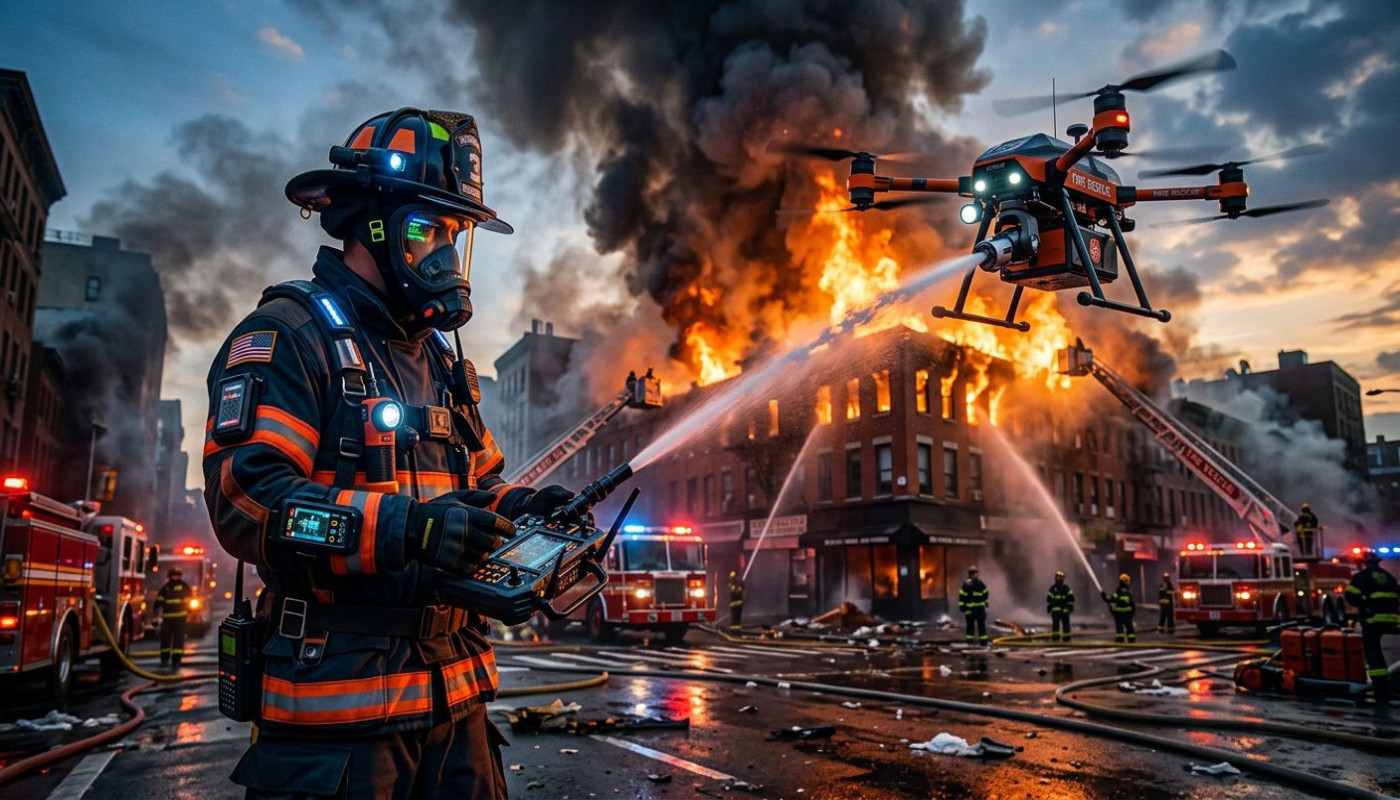
The integration of drone firefighting technology into aerial fire surveillance has rapidly transformed the capabilities of emergency response teams. Firefighting drones equipped with thermal imaging sensors deliver critical data by mapping fire spread in real time, pinpointing hot spots invisible to the naked eye, and supporting targeted search and rescue efforts. Fire mapping drones can cover challenging terrains that are inaccessible or dangerous for ground crews, while their real-time high-resolution imaging allows for swift assessments of changing conditions. Wildfire response drones, using advanced GPS and sensory technology, enable coordinated strategies that minimize risk to human firefighters and optimize resource allocation. As chief aerial operations analyst, it must be emphasized that the deployment of firefighting drones not only enhances situational awareness but also accelerates decision-making, providing incident commanders with precise information that shapes effective, life-saving interventions.
Innovative fire suppression agents
Recent breakthroughs in new fire suppression agents are transforming the landscape of firefighting, offering high-performance solutions that minimize harm to both people and the environment. Eco-friendly firefighting technologies now play a pivotal role, with advanced fire suppression systems replacing traditional water and foam approaches. Among these advancements, water mist firefighting stands out for its unique ability to rapidly cool flames and reduce heat with minimal water usage, making it suitable for sensitive environments such as museums, hospitals, and data centers. Water mist systems operate by creating ultra-fine droplets that absorb heat efficiently and displace oxygen, suppressing fires with less collateral damage and water runoff.
Clean agent suppression represents a significant leap in clean agent fire systems, utilizing gaseous substances like FK-5-1-12 or HFC-227ea to extinguish fires without leaving residue or posing risks to electronic equipment. These clean agent fire systems are specifically engineered for high-value assets and mission-critical facilities, as they interrupt the chemical reactions fueling combustion while being safe for occupants and the ozone layer. New fire suppression agents are increasingly designed with sustainability in mind, enabling reliable, eco-friendly firefighting while complying with international regulations on greenhouse gas emissions and hazardous materials. This scientific progress reflects a commitment to protecting both human life and environmental resources through advanced fire suppression strategies.
Wearable tech for firefighters
Firefighter wearable technology is rapidly transforming frontline safety and response effectiveness. Modern smart firefighter gear now integrates advanced biometric sensors into helmets, jackets, and wristbands, delivering continuous firefighter health monitoring. These biometric safety devices track vital signs such as heart rate, respiratory rate, and body temperature, issuing immediate alerts when dangerous thresholds are reached, enabling rapid intervention to prevent exhaustion or injury. Smart helmets equipped with thermal imaging, heads-up displays, and integrated communication modules vastly improve situational awareness by providing real-time visual data and allowing seamless coordination in smoke-filled or noisy environments.
Connected firefighting equipment also plays a pivotal role in enhancing operational efficiency. Wearable devices transmit location and health information directly to incident command centers, allowing commanders to deploy resources more strategically and monitor team status throughout hazardous situations. Firefighter wearable technology includes rugged, wireless communication systems that ensure uninterrupted contact even in signal-compromised areas, supporting safer navigation and faster emergency responses. Collectively, these innovations mark a significant leap forward in firefighter protection, ensuring responders are better equipped, connected, and monitored than ever before.
On the same subject